Wednesday, September 28, 2011






Tuesday, September 27, 2011
Hot Mumbai models

sexy models
Name: Rachel BayrosMy fashion dream is: I have come a long way in India, now I have dreams to make it internationally.
Craziest OMG Lakmé Fashion Week (LFW) moment: Nothing in particular has left an impression on me. I notice the fight between reality and pretence when it comes to this industry. Every person is at a deferent level, I have gathered a lot and learnt a lot from each person I meet. I have learnt how not to take everything seriously and take the good from every person I meet. If an OMG moment does happen, I would laugh about it and find it silly.
Name: Fiona Melissa Thomas
My fashion dream is: To become an internationally recognised print and/or catwalk model.Craziest OMG LFW moment: A lot of the diva attitudes I've seen have made me think OMG but nothing too crazy...yet.
Name: Gia Johnson Singh
My fashion dream is: To continue working in the most beautiful places in the world. My dream is for that to never end!Craziest OMG LFW moment: The quick outfit changes within a show can be crazy and totally frantic! Seeing all the girls running through backstage is a funny experience and sometimes our bodies move faster than our heads. I can quite honestly say I've tripped over and even tried to put both legs in the same trousers leg-hole. It's as if all my co-ordination goes out of the window. It's good to be able to laugh at yourself though.
Name: Ashika Pratt
My fashion dream is: Everyday I'm living in a fashion dream, each piece of clothing I get to wear at shows and shoots are pieces of art. I guess being able to take them home at the end of the day would be my dream.Craziest OMG LFW moment: At fashion weeks there is always good food and a lot of it...anyone who says models don't eat, haven't seen us in between shows!
Name: Tamara Moss My fashion dream: For models to be able to wear more skimpy clothes on the ramp and not be attacked by terrorist groups like the Shiv Sena.Craziest OMG LFW moment: The media publishing pictures of the "wardrobe malfunction" that takes place at the shows. Clothes and a woman’s body are beautiful things. The Indian government even acknowledging a case against this is ridiculous. There are wrong people on the wrong side of the law. LFW is now getting more serious and I am glad.
Name: Mashoom Singha
My fashion dream is: To do a a brand campaign for an international designer. Craziest OMG LFW moment: I feel LFW is quite sober. The Mai Mumbai show last year was a good platform, with Naomi Campbell walking the ramp which was very different.
Saturday, September 10, 2011
sharmila ko khub mila
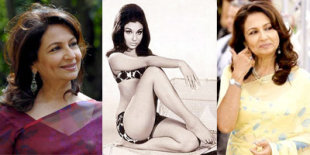
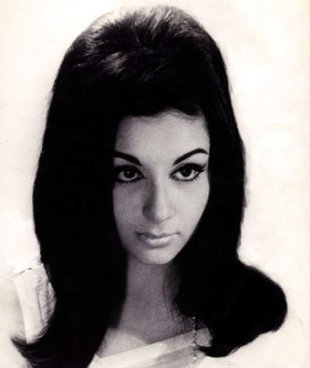
The Beginning
Sharmila Tagore began her career with Satyajit ray's Bengali film 'Apur Sansar' in 1959 at the tender age of 14. Her Bollywood debut was the film 'Kashmir Ki Kali' opposite Shammi Kapoor, as a beautiful and innocent flower-seller in the heavenly Kashmiri landscape, after which there was no looking back.Sharmila Tagore really burst on the scene when she appeared in a bikini in the film 'An Evening in Paris' becoming the first Indian actress to do so.
Sharmila's oomph factor lies in her ethereal charm and elegance,topped with her infectious dimpled smile. In the older days, her winged eye-liner look hugely added to her aura, not to mention that it was a major trendsetter.
Acting came calling to her when she was spotted by renowned filmmaker Satyajit Ray while she was still studying in school, all of 13. Her father was persuaded to let her act, which he did only because the film was a combination of well-regarded Ray and renowned author Bibhutivibhushan Bondopadhyay whose story it was.
In the film Parineeta, Sharmila Tagore's son, Saif Ali Khan rides on the same train Tagore rides on in Aradhana.
At present, Sharmila Tagore is busy taking care of her ailing husband keeping aside everything else. She retired from the Censor Board in March and was last seen in the movie 'Break Ke Baad'.
Starting off as a gawky teenager in her first film, who had to be shouted at by the director, to the legend that she is considered today, Sharmila Tagore's career has indeed, been a remarkable one. Despite setting the trend of being sexy in Indian cinema, Sharmila Tagore went on to grab performance oriented roles, proving her versatility. After opening the road to future divas of Bollywood, Sharmila embarked on her own journey in the glittering B-town which was not only successful but highly distinguished
Thursday, September 1, 2011
bogy-dogy

Like Snow White and the Seven Dwarfs, Koena Mitra too has got seven puppies at her home. They all belong to toy breed and she got them from exotic countries.
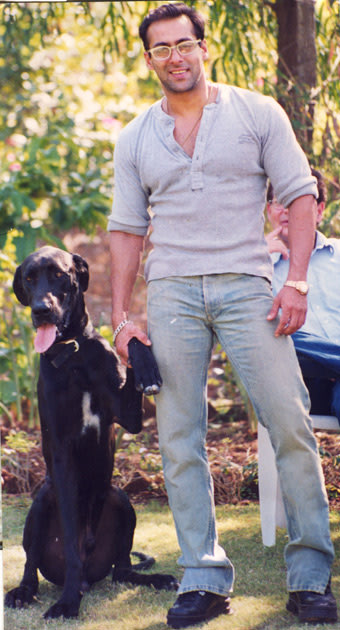
salman khan
Parveen Babi was a bagi lady

She lived a life full of zest and fun, a glimpse of which, we also saw in many of her roles. Along with her contemporaries like Rekha, Hema Malini and Zeenat Aman, she was responsible for bringing about a sea of change to the way Indian women were portrayed on screen. She played a crucial role in changing traditional mindsets and changing pre-conceived notions concerning women.
Parveen Babi was born in the year 1949 in a Muslim family based in Junagadh as Parveen Wali Mohammad Khan. She was born to her parents only after 14 years of her. Her father, an administrator with the Nawab of Junagadh, passed away when she was only seven years of age.
She landed her first film, ‘Charitraheen’, opposite cricketer Salim Durrani, while she was still in college. Though the film was a major failure at the box-office, Parveen Babi was instantly noticed. Her next two films also bombed but Parveen was accepted by the film fraternity and was signed on for almost nine films. Her fifth film, ‘Majboor’, finally put a rest on the initial flops of her career. Though she only played the role of an arm-candy to the reigning superstar of the time, Amitabh Bachchan, the film had opened the doors of success for her.
The landmark film of her career was the film ‘Deewar’, as it established Parveen Babi as the ultimate glamour girl of Bollywood. Her image as the chic Western woman with trademark long locks and a feisty spirit found base with the film. Her portrayal as a woman who drank freely and indulged in pre-marital sex with her lover, (Amitabh Bachchan) was in defiance to the ‘norms’ of the society at that time. In a way, the film helped in bringing about a slight change in the way women were perceived.
After ‘Deewar’ Parveen’s career, once again, hit a low phase with many of her films getting trashed at the box-office. However this spate of flops could not hinder her success as ‘Amar Akbar Anthony’ turned out to be a goldmine for her. Though her role was not too significant, it is said that her role was the best amongst the other leading ladies of the film. Parveen was once again ruling the roost in Bollywood. She acted in many notable films like ‘Namak Halaal, ‘Shaan’, ‘The Burning Tran’, ‘Suhaag’, ‘Kaala Patthar’ and ‘Pati Patni Aur Woh’ among many others. In fact, her performance in her cameo in Manoj Kumar’s ‘Kranti’ was said to be much better than that of the leading lady of the film, Hema Malini.

A great deal of credit for Parveen’s successful filmy career should be given to Amitabh Bachchan since most of her major hits were films that carried his star power. There can be no doubt that Amitabh Bachchan was the reigning superstar of the Hindi film industry, and acting alongside him bore positive results for Parveen. Parveen Babi was second only to Jaya Bachchan with regard to the maximum number of films opposite Amitabh Bachchan. They were even rumored to be having an affair with each other at that time.
“Most of my films with Parveen were superbly successful. The audience liked us as a pair. She brought in a new, bohemian kind of leading lady to the screen. We'd work on all these films and go our own way. But because we belonged to the same social circle we'd visit each other, listen to music. She was a very fun loving, light-hearted person. Always full of joie de vivre!” – Amitabh Bachchan
Parveen Babi never got married in her lifetime but she had a few relationships, some of which were tumultuous and had a negative impact on her. She dated some high profile names (mostly married) of the industry like Danny Denzongpa, Kabir Bedi and Mahesh Bhatt. She reported put her career on hold and took off with then boyfriend Kabir Bedi who was to play the title role in an Italian television serial, Sandokan. Her relationship with director Mahesh Bhatt was the one which remained the most talked about. The movie ‘Arth’, directed by Mahesh Bhatt, was the story of his extra-marital relationship with her, though he never really acknowledged it. Mahesh Bhatt, once again, presented her life on the silver screen with ‘Woh Lamhe’ featuring Kangana Ranaut as Parveen Babi.
After acting in her last movie, ‘Akarshan’, Parveen disappeared from public view all of a sudden. It is said that it was a combined result of her association with spiritual philosopher, U.G. Krishnamurthy, the release of the film, ‘Arth’ and her disturbed state of mind (she was said to be suffering from schizophrenia) that led her to abandon everything and move away to New York. She returned to Mumbai in the year 1992, and had become unrecognizable owing to her bloated figure. Upon her return, she accused many high profile dignitaries, which included Bill Clinton and Amitabh Bachchan, of plotting to kill her. In 2002, she claimed that she had evidence against Sanjay Dutt in the 1993 serial bomb blasts case. She never turned up for the court hearings saying she feared for her life.
Parveen had become a recluse by then and hardly anyone came across her. In 2005, she was found dead in her apartment. She had reportedly been dead for three days and, apparently, no one had noticed her slipping away from life. For a woman who led such a glorious life, the end to her life was largely abrupt and undeserving. She, who had entertained millions, died a lonely death after years of isolation. Irrespective of what her life had become, the ultimate queen glamour had given her all to her career and the people she loved. She was very different from the ‘herd’ of actresses and her uniqueness was the main element with which she ruled more than a million hearts.
rekha jaisa nahi dekha
She was the woman who mesmerized millions of fans with her sensuality and brought about a change in Bollywood by rising to the top at a time when only "beautiful" actresses were chosen in films.
Today, despite being in her fifties, she continues to stir the imagination of men and women alike, owing to the aura of mystery that has always surrounded her.The person who made being 'divaesque' fashionable and kept generations of fans constantly bewitched with her bare existence– that's Rekha for you and here is her Bollywood journey.
 "I was called the 'Ugly Duckling' of Hindi films because of my dark complexion and South Indian features. I used to feel deeply hurt when people compared me with the leading heroines of the time and said I was no match for them. I was determined to make it big on sheer merit," Rekha had once said. (Those people probably had no clue what an icon Rekha would become in the years to come.) Rekha took matters into her own hands and took to yoga, nutritional food and a disciplined lifestyle to change her plump and unattractive looks into a slender and beautiful woman. The ugly duckling had indeed transformed into a swan for everyone in the industry to see.
"I devoted thirty-one years of my life to this industry and in turn this industry has given me everything that I can be proud of - name, fame and the perks that go with stardom."
Her first film, where she was lauded for her performance, was 'Do Anjaane' where she starred opposite Amitabh Bachchan. The film was a commercial as well as critical success and it launched Rekha's success story in Bollywood. The movie 'Ghar' opposite Vinod Mehra was considered a milestone in Rekha's career with respect to her performance. Her portrayal of a rape victim who struggles to come to terms with life was beautifully brought forth by Rekha and, indeed, remains one of Rekha's best works till date.
In the same year, 'Muqaddar Ka Sikander' was released which was again, opposite Amitabh Bachchan, and it turned out to be the biggest hit of the year. The film established Rekha as the top actress in the industry and also led to the beginning of the adulterous affair between her and Bachchan, who was already married.
"Well loneliness is still a part of me, but being alone is not necessarily being lonely."
Rekha's affair with Amitabh Bachchan has captured the fancy imaginations of millions of fans who doted on the pair that went on to star in a total of 10 films together, viz. 'Muqaddar Ka Sikander', 'Do Anjaane', 'Namak Haraam', 'Mr. Natwarlal', 'Ganga Ki Saugandh', 'Suhaag', 'Alaap', 'Khoon Pasina', 'Immaan Dharam' and 'Silsila'. The two, reportedly, had a full fledged affair behind the scenes in spite of Bachchan's marital status. In fact, the love love triangle featuring Bachchan, wife Jaya and Rekha was captured in the film 'Silsila' which would be the last time they would be working together.
Of the affair, Yash Chopra states, "I was always on tenterhooks and scared (during Silsila) because it was real life coming into reel life. Jaya is his wife and Rekha is his girlfriend – the same story is going on (in real life). Anything could have happened because they are working together." Amitabh Bachchan finally buckled to media and family pressure and called it quits with Rekha. Their affair, though unsuccessful, has remained one of the most popular subjects till date and even today, if the two happen to be seen at the same event, the media goes into a frenzy trying to capture each one's reactions. After the turmoil in her personal life, came a new dawn in her career. She went on to act in films which brought her a great deal of appreciation from all quarters. She starred in art films and those which were woman-centric. Her role in 'Umrao Jaan' fetched her a National Award for Best Actress. Her role of a courtesan with a heart of gold showed how much Rekha had grown as an artist. Later the film was remade with Aishwarya Rai stepping into Rekha's shoes, but it sank without a trace.
Films like 'Utsav', 'Ijaazat', 'Khubsoorat' and 'Khoon Bhari Maang' were some films which Rekha acted in when she was at the peak of her career, and her wonderful performance in the films was celebrated all over. During the 90s, Rekha's career started sliding and the only notable films were 'Kama Sutra: A Tale of Love' and 'Khiladiyon Ka Khiladi', for which she won the Filmfare for Best Supporting Actress.
 Most recently, we saw Rekha as the seductive crooner in 'Parineeta', mother and grandmother to Hrithik Roshan in 'Koi Mil Gaya' and 'Krish' respectively. Though her contemporaries have easily sunken in the roles of mothers and grandmothers with ease, playing such roles more than often, Rekha has always been very selective of her work and rarely fits into out minds as the typical mother figure of Bollywood.
Rekha has always been the ultimate symbol of sensuality and mysteriousness and has lived on in the minds of people despite almost disappearing from the movie scene for such a long time. At a time when the current batch of actresses try every move to bag attention, Rekha commands all that attention without even saying a word. This, only proves the stature she achieved in the industry owing to sheer talent and hard work and, of course, being the diva that she always was.
Today, despite being in her fifties, she continues to stir the imagination of men and women alike, owing to the aura of mystery that has always surrounded her.The person who made being 'divaesque' fashionable and kept generations of fans constantly bewitched with her bare existence– that's Rekha for you and here is her Bollywood journey.
"I devoted thirty-one years of my life to this industry and in turn this industry has given me everything that I can be proud of - name, fame and the perks that go with stardom."
Her first film, where she was lauded for her performance, was 'Do Anjaane' where she starred opposite Amitabh Bachchan. The film was a commercial as well as critical success and it launched Rekha's success story in Bollywood. The movie 'Ghar' opposite Vinod Mehra was considered a milestone in Rekha's career with respect to her performance. Her portrayal of a rape victim who struggles to come to terms with life was beautifully brought forth by Rekha and, indeed, remains one of Rekha's best works till date.
In the same year, 'Muqaddar Ka Sikander' was released which was again, opposite Amitabh Bachchan, and it turned out to be the biggest hit of the year. The film established Rekha as the top actress in the industry and also led to the beginning of the adulterous affair between her and Bachchan, who was already married.
"Well loneliness is still a part of me, but being alone is not necessarily being lonely."
Rekha's affair with Amitabh Bachchan has captured the fancy imaginations of millions of fans who doted on the pair that went on to star in a total of 10 films together, viz. 'Muqaddar Ka Sikander', 'Do Anjaane', 'Namak Haraam', 'Mr. Natwarlal', 'Ganga Ki Saugandh', 'Suhaag', 'Alaap', 'Khoon Pasina', 'Immaan Dharam' and 'Silsila'. The two, reportedly, had a full fledged affair behind the scenes in spite of Bachchan's marital status. In fact, the love love triangle featuring Bachchan, wife Jaya and Rekha was captured in the film 'Silsila' which would be the last time they would be working together.
Of the affair, Yash Chopra states, "I was always on tenterhooks and scared (during Silsila) because it was real life coming into reel life. Jaya is his wife and Rekha is his girlfriend – the same story is going on (in real life). Anything could have happened because they are working together." Amitabh Bachchan finally buckled to media and family pressure and called it quits with Rekha. Their affair, though unsuccessful, has remained one of the most popular subjects till date and even today, if the two happen to be seen at the same event, the media goes into a frenzy trying to capture each one's reactions.
Films like 'Utsav', 'Ijaazat', 'Khubsoorat' and 'Khoon Bhari Maang' were some films which Rekha acted in when she was at the peak of her career, and her wonderful performance in the films was celebrated all over. During the 90s, Rekha's career started sliding and the only notable films were 'Kama Sutra: A Tale of Love' and 'Khiladiyon Ka Khiladi', for which she won the Filmfare for Best Supporting Actress.
Rekha has always been the ultimate symbol of sensuality and mysteriousness and has lived on in the minds of people despite almost disappearing from the movie scene for such a long time. At a time when the current batch of actresses try every move to bag attention, Rekha commands all that attention without even saying a word. This, only proves the stature she achieved in the industry owing to sheer talent and hard work and, of course, being the diva that she always was.
zeenat -really a zeenat
Zeenat Aman was one of the most iconic actresses of the 70s and the 80s and was the one who completely transformed the way actresses were portrayed in films.
She was the first Indian woman who was considered to be a sex-symbol owing to her bold appearances in the films that she acted in. She changed the perception of movie-goers towards women characters, who, before her arrival, were mostly cast in meek and submissive roles.Zeenat Aman was born to a Hindu mother and a Muslim father Amanullah Khan, the scrip-writer of classic movies like 'Mughal-e-Azam' and 'Pakeezah', in 1951. Her parents separated when she was a child and later, when Zeenat was 13, her father passed away. While her mother re-married and moved to Germany, Zeenat Aman made her base in India to pursue a career, that has been exemplary for all struggling actresses.
She made her her way into the industry after winning the Miss Asia Pacific title in 1970, being the first Indian woman to do so. Her debut film was 'Hulchul', directed by O.P. Ralhan, which was failure, as was her second film, 'Hungama', also by the same director. It was her third film, 'Hare Rama Hare Krishna', which catapulted her to instant fame and stardom. Her portrayal as a the westernized and emotionally disturbed junkie 'Janice/Jasbir' won her accolades from all quarters and she took away the limelight from the leading lady Mumtaz, who was the reigning queen of the industry at that time.
Zeenat went on to win the Filmfare for her role in the film and the song Dum Maaro Dum became a cult song which is considered evergreen. Quite recently, Deepika Padukone performed on the remixed version of the song but it could not shake the popularity of the original song at all. For the first time, the Indian audience had accepted a not-so-pure female character with open arms, and Bollywood opened its doors for an unconventional actress like Zeenat Aman.
'Yaadon Ki Baraat' folowed, and her hip guitar act in the song Churaa Liya was a major hit with the audiences. Zeenat constantly broke barriers in the film industry and chose roles that were different from the ones that were being churned out for 'regular' actresses of her generation.
In the span of 3 years, Aman gave herself to roles which were considered 'unconventional' before. She played the role of an opportunist who dumbs her lover for a millionaire in 'Roti Kapda Aur Makaan', an ambitious woman who contemplates abortion for the sake of her career, a carefree hooker in 'Manoranjan', a woman involved in an extra-marital affair in 'Dhund' and a girl who falls in love with her mother's one-time lover in 'Prem Shastra'. Slowly but steadily, Aman was help change the long-held notions about women, in films, who always swore obeisance to their lovers/husbands.
After acting in a number of films, Zeenat landed a role in the Raj Kapoor film 'Satyam Shivam Sundaram'. The film drew flak for showing something that was totally opposed to its theme i.e. a film about eternal beauty showcasing only Aman's sex-appeal. The film was more in news for Aman's barely there saris and her lip-lock with co-star Shashi Kapoor. No actress of her time would even think about plunging into such a daring act. But Zeenat Aman, being the trendsetter that she was, never shied away from anything and stood by her film.
Her one chance to get into Bollywood took a dip since the movie 'Shalimar' co-starring Dharmendra and international stars like Rex Harrison and Sylvia Miles crashed at the box-office owing to its pathetic script. 'Don' was the film which set Zeenat Aman's career rolling again after a few miserable movies. She showed her abilities as she matched Amitabh Bachchan's action skills in the film. Her revenge-seeking action heroine role was very much on the lines of a Bond girl and we think Miss Aman would have made a super hot Bond girl of her time.
In the midst of her glittering film career, she developed an affair with the very married Sanjay Khan on the sets of the film 'Abdullah'. Aman was reportedly so smitten by him that when she was asked to guest edit a popular magazine, she made Sanjay Khan the centre spread and their whirlwind affair resulted in a secret nikaah between them. However, they broke up after she was assaulted by Sanjay Khan and his wife Zarine Khan at a party. The physical assault left her eye permanently damaged.
She went on record, many years later, to state that her marriage to Sanjay Khan was one of the biggest mistakes of her life. She said, "I was very vulnerable at that time. A few weeks of madness, that was all it was. Getting married to a married man was never going to work. I was too young, naïve and silly to know what was right for me." She went on to marry Mazhar Khan who was talented but not very successful as an actor. Her relationship with Khan was an explosive one with the two reportedly at loggerheads each time they met. The two got married all of a sudden which shocked everyone from the industry. Their marriage was as violent as their relationship and Aman even went public accusing her husband of physical abuse. The marriage was on the verge of a breakdown, when Mazhar was diagnosed with renal cancer. Aman then started taking care of him and had, reportedly, spent all her savings when he finally lost his battle to the disease in the year 1988.
Post her husband's death, she continued facing a lot of difficulties as she got embroiled in a bitter fight with her in-laws for the custody of her two sons, Azaan and Zahaan. Aman finally won the custody of her children and concentrated on bringing them up as well as restore her lost dignity with time.
Aman returned to the silver screen and acted in films like 'Bhopal Express' 'Boom', etc. which hardly left an impact in the minds of the audience. Today Zeenat Aman leads a quiet life and is occasionally seen at award shows and events. Most recently, Aman walked the ramp as a showstopper at the IIJW, joining the current crop of actresses and contemporary, who were also at the same platform.
 As a final note, we would like to say that Zeenat Aman was one of the best and the most revolutionary things to have happened to Bollywood. She almost single-handedly changed the face of Indian cinema with her bold attitude and willingness to trod any path that challenged her creativity and the pre-conceived notions of people. Zeenat Aman has always been, and will always remain the original diva of Bollywood.
She was the first Indian woman who was considered to be a sex-symbol owing to her bold appearances in the films that she acted in. She changed the perception of movie-goers towards women characters, who, before her arrival, were mostly cast in meek and submissive roles.Zeenat Aman was born to a Hindu mother and a Muslim father Amanullah Khan, the scrip-writer of classic movies like 'Mughal-e-Azam' and 'Pakeezah', in 1951. Her parents separated when she was a child and later, when Zeenat was 13, her father passed away. While her mother re-married and moved to Germany, Zeenat Aman made her base in India to pursue a career, that has been exemplary for all struggling actresses.
She made her her way into the industry after winning the Miss Asia Pacific title in 1970, being the first Indian woman to do so. Her debut film was 'Hulchul', directed by O.P. Ralhan, which was failure, as was her second film, 'Hungama', also by the same director. It was her third film, 'Hare Rama Hare Krishna', which catapulted her to instant fame and stardom. Her portrayal as a the westernized and emotionally disturbed junkie 'Janice/Jasbir' won her accolades from all quarters and she took away the limelight from the leading lady Mumtaz, who was the reigning queen of the industry at that time.
Zeenat went on to win the Filmfare for her role in the film and the song Dum Maaro Dum became a cult song which is considered evergreen. Quite recently, Deepika Padukone performed on the remixed version of the song but it could not shake the popularity of the original song at all. For the first time, the Indian audience had accepted a not-so-pure female character with open arms, and Bollywood opened its doors for an unconventional actress like Zeenat Aman.
'Yaadon Ki Baraat' folowed, and her hip guitar act in the song Churaa Liya was a major hit with the audiences. Zeenat constantly broke barriers in the film industry and chose roles that were different from the ones that were being churned out for 'regular' actresses of her generation.
In the span of 3 years, Aman gave herself to roles which were considered 'unconventional' before. She played the role of an opportunist who dumbs her lover for a millionaire in 'Roti Kapda Aur Makaan', an ambitious woman who contemplates abortion for the sake of her career, a carefree hooker in 'Manoranjan', a woman involved in an extra-marital affair in 'Dhund' and a girl who falls in love with her mother's one-time lover in 'Prem Shastra'. Slowly but steadily, Aman was help change the long-held notions about women, in films, who always swore obeisance to their lovers/husbands.
After acting in a number of films, Zeenat landed a role in the Raj Kapoor film 'Satyam Shivam Sundaram'. The film drew flak for showing something that was totally opposed to its theme i.e. a film about eternal beauty showcasing only Aman's sex-appeal. The film was more in news for Aman's barely there saris and her lip-lock with co-star Shashi Kapoor. No actress of her time would even think about plunging into such a daring act. But Zeenat Aman, being the trendsetter that she was, never shied away from anything and stood by her film.
Her one chance to get into Bollywood took a dip since the movie 'Shalimar' co-starring Dharmendra and international stars like Rex Harrison and Sylvia Miles crashed at the box-office owing to its pathetic script. 'Don' was the film which set Zeenat Aman's career rolling again after a few miserable movies. She showed her abilities as she matched Amitabh Bachchan's action skills in the film. Her revenge-seeking action heroine role was very much on the lines of a Bond girl and we think Miss Aman would have made a super hot Bond girl of her time.
In the midst of her glittering film career, she developed an affair with the very married Sanjay Khan on the sets of the film 'Abdullah'. Aman was reportedly so smitten by him that when she was asked to guest edit a popular magazine, she made Sanjay Khan the centre spread and their whirlwind affair resulted in a secret nikaah between them. However, they broke up after she was assaulted by Sanjay Khan and his wife Zarine Khan at a party. The physical assault left her eye permanently damaged.
She went on record, many years later, to state that her marriage to Sanjay Khan was one of the biggest mistakes of her life. She said, "I was very vulnerable at that time. A few weeks of madness, that was all it was. Getting married to a married man was never going to work. I was too young, naïve and silly to know what was right for me." She went on to marry Mazhar Khan who was talented but not very successful as an actor. Her relationship with Khan was an explosive one with the two reportedly at loggerheads each time they met. The two got married all of a sudden which shocked everyone from the industry. Their marriage was as violent as their relationship and Aman even went public accusing her husband of physical abuse. The marriage was on the verge of a breakdown, when Mazhar was diagnosed with renal cancer. Aman then started taking care of him and had, reportedly, spent all her savings when he finally lost his battle to the disease in the year 1988.
Post her husband's death, she continued facing a lot of difficulties as she got embroiled in a bitter fight with her in-laws for the custody of her two sons, Azaan and Zahaan. Aman finally won the custody of her children and concentrated on bringing them up as well as restore her lost dignity with time.
Aman returned to the silver screen and acted in films like 'Bhopal Express' 'Boom', etc. which hardly left an impact in the minds of the audience. Today Zeenat Aman leads a quiet life and is occasionally seen at award shows and events. Most recently, Aman walked the ramp as a showstopper at the IIJW, joining the current crop of actresses and contemporary, who were also at the same platform.

hemamalini- wonderfull lady

The actresses of the present times strive hard to come close to the stature of the original glamour girls of the yesteryears. Over the course of next few weeks we'll take a look at the lives and personas of these veteran actresses.
We start with the original “Dream Girl”:
She is 62 years old but many feel that she still looks more beautiful and graceful than her daughter who is 34 years younger to her. She was the first (and is probably the only) dream girl of the Bollywood, a feat Aishwarya Rai can only dream of achieving. A Padma-awardee, Hema Malini is one of those few Bollywood actresses who can boast of an acute blend of acting prowess and breathtakingly elegant looks.
Hema Malini was the second Tamil actress to make waves in mainstream Bollywood after Vyjayanthimala. Born as Hema Malini R. Chakravarty in a Tamil Iyengar family in October 1948, her first attempt to act (at the age of 15) in a movie couldn't materialise as Tamil director Sridhar rejected her on the grounds that she was too thin! But this could not deter the young Hema who debuted opposite legendary showman, Raj Kapoor in 'Sapnon Ka Saudagar' just four years (1968) after her rejection.
And this was the beginning for Hema Malini's becoming the most sought after lead actress for the next two decades. She had that rare ability of fitting instantly into a wide array of diverse roles. In fact, she could easily accept challenging roles which most of the heroines of the 1960s refused to do. She played the role of a young widow in Andaaz (1971) and in Lal Patthar (1971) she played a character with negative shades.
In 1972, she lit up the big screen with her glittering double-role performance against Sanjeev Kumar and Dharmendra in the cult hit 'Seeta and Geeta'. The movie earned her her first Filmfare Best Actress Award and till this day, it remains one of the best in her career.
Then came the life-changing blockbuster 'Sholay', a movie which redefined not only the lives of the actors but was instrumental in altering the Indian cinemascape. She etched the role of 'Basanti', the loquacious and affable “tonga-driver” beautifully on the screen and won hearts all across the country. It is said that it was during the filming of 'Sholay' that Hema fell in love with Dharmendra.
The Dharmendra-Hema pair, often considered as the coming together of two polarised extremes of femininity and masculinity, elicited brilliant on-screen chemistry and was seen in as many as 28 films, the most prominent ones being 'Dream Girl', 'Charas' 'Naya Zamana', 'Raja Jani', 'The Burning Train' and of course, 'Sholay'.
During the mid-70s, her fans started calling her "Dream Girl", an allusion to the movie of the same name where she starred opposite Dharmendra. The name was only fitting as she had actually become the most desired, most eligible bachelorette of the country.
By the late 70s, Bollywood was gripped by the movies depicting the valiant action hero who could handle a dozen goons as comfortably as taking a walk in the park. In that testosterone-filled era, Hema helped keep the door open for female-centric movies, especially with her three Gulzar films --- Khushboo(1975), Kinara (1977) and Meera (1979).
In 1980, Hema tied the knot with Dharmendra. She decided that she'll continue acting in movies. In the early 1980s Hema starred in breakthrough films like Manoj Kumar's 'Kranti', Manmohan Desai's 'Naseeb', Kamal Amrohi's 'Razia Sultan' and Vijay Anand's 'Rajput'. Gradually, her attention shifted to the upbringing of her daughters, Esha and Ahna, who were born in 1982 and 1984, respectively.
By 1984, Hema was a working mother, trying hard to strike a balance between family responsibilities and professional commitments. In 1983 she starred in Andha Kanoon which marked the debut of Tamil actor Rajinikanth in Bollywood. In the film she played the sister of Rajinikanth, seeking revenge for the death of her parents. In the late 80s, she delivered hits like Ek Chaddar Maili Si (1986), Rihaee and Jamai Raja (1990), in which she played more matured roles. But her on-screen presence was discernably declining.
In 1992, she made her directorial debut with the SRK-Divya Bharti starrer 'Dil Ashna Hai'. The movie couldn't do well at the box office and Hema's film career started to fade gradually. She was now focusing on dance ballets and Television serials. Dance has always been her first love, something which she never hesitated to confess.
“My interest was dance and in the beginning, I didn't enjoy acting at all. It was my mother who brought me into films and who looked after my career. I remember each time a producer came to meet her, my only reaction was, 'Oh God, another year of my life gone,'” she has been quoted as saying.
Hema Malini has been active in Hindi films for the last forty years and was lately seen playing prominent roles in Ravi Chopra's 'Baaghban' and 'Baabul' and Yash Chopra's love saga 'Veer Zaara' opposite Amitabh Bachchan. She continues to appear in movies occasionally, her last appearance (a cameo) being in the movie 'Bbuddah Hoga Tera Baap'. Hema remains a Bharatnatyam exponent.
In 2000, Hema Malini was conferred the fourth highest civilian award Padma Shri by the Government of India. She was nominated for the Filmfare Best Actress Award for ten times from 1974 to 2004 and won it once ('Seeta aur Geeta', 1972). In 1999, she got the coveted Filmfare Life Time Achievement Award.
Hema forayed into politics when she joined BJP in 2004. She is now a Rajya Sabha MP under the aegis of BJP. She spends most of her time by being involved in charitable and social ventures, while making occasional appearances in films. With her film career less hectic, she is often seen in BJP rallies as well.
It's been 41 since the endearing, drop-dead-gorgeous “Basanti” took the B-town by storm but her charisma refuses to diminish. During the course of her career, she took many risks and always made her own decisions. Her mantra in life has always been “my way or the highway”. She acted in those films which were rejected by the prominent actresses of the 70s. And then she also made a strong decision of marrying already-married Dharmendra which drew her considerable flak.
Many actresses have made unsuccessful attempts to usurp her from the throne. Hema continues to be the real 'Dream Girl' of the Bollywood. She remains the role-model for several aspiring Bollywood actresses
dream girl of bollywood

Vidya Balan in a trendy top

kareena in new look

deepika so sexy

sonakshi in new frame

katrina always superb

priyanka kaa dunka

bipasha with body
Saturday, July 23, 2011
Sand Sculptures


Monsoon in Assam
The monsoon floods have submerged parts of Assam's Pobitora wildlife sanctuary, forcing the rare one-horned Rhinoceros and localites take shelter on higher land


Asian investors - gold fever

Gold fever is gripping Asian investors and could spread to central banks as global growth uncertainties tarnish the appeal of other assets, putting bullion on course for more gains but also provoking fears about supply.
Spot gold surged more than $100 in 11 straight days to Tuesday, its longest winning streak in four decades, hitting a record $1,609.51 an ounce, as debt default fears in the United States and Europe drove investors to seek safety.
Gold stayed above $1,600 on Thursday as market watchers remained cautious about the debt situation on both sides of the Atlantic.Asian giants India and China, the world's two biggest consumers of the precious metal, expect to see demand continue to climb for the rest of the year, as growing wealth and stubbornly high inflation make bullion an attractive asset."Record high prices won't scare away investors," said Shi Heqing, an analyst at Antaike, a state-backed metals consultancy based in Beijing.
"Investors are likely to chase the rally and continue to buy gold because paper money feels increasingly worthless and they are worried about inflation."
Shi expects China's gold demand to rise about 20 percent to near 700 tonnes this year from 570 tonnes in 2010 as Beijing struggles to tame annual inflation that hit a three-year high of 6.4 percent in June.
In India, the wedding season in mid-August is expected to drive up sales of gold, a fixture in dowry and gifts.
"The case for gold in the longer term is still very strong. Gold may appeal to new classes of investors who previously avoided the market in favour of more mainstream investments like bank deposits, bonds and equities," said a Singapore-based trader."Potentially there's a whole new market for small-sized physical gold bars if these investors lose faith in paper."Technical charts point to gold hitting as much as $1,940 by the end of the year, given the strong bullish momentum in the past two weeks, Reuters market analyst Wang Tao says.
'$2-TRILLION, $3-TRILLION ELEPHANT'
Even central banks, until recently keen to disperse some of their gold holdings, could soon be sniffing around for more of the precious metal, analysts say.
In 2010 central banks became net buyers of gold for the first time in 21 years, as developed nations of Western Europe and North America reduced selling in the wake of the global financial crisis while emerging economies tried to diversify their holdings of foreign currencies, especially the dollar.
Deepening worries about debt crisis contagion in the euro zone, uncertainties around U.S. growth in the second half and its impact on the greenback, are likely to increase central banks' appetite for gold.
"If you look at projections on debt for the United States and for some European countries enjoying triple A status, it's looking very likely that these countries are moving from triple A to something less shiny," said Philip Klapwijk, executive chairman at GFMS, a metals research consultancy.
"And that's surely going to burnish gold's credentials for asset managers globally, particularly central banks and some of the sovereign wealth funds."
But central banks have to tread lightly, as sizable purchases could jolt the relatively small gold market.
On April 24, 2009 spot gold prices jumped more than 1 percent, when China announced an increase of 454 tonnes in its gold holdings, representing a jump of 76 percent from 2003, the only previous occasion it revealed the size of its gold reserves.Last year, global gold supply, including mine production and scrap, stood at 4,108.2 tonnes, which translates into about $210 billion at current price. Above-ground gold stocks stood at an estimated 165,000 tonnes, valued at more than $8 trillion.
By comparison, the amount of U.S. debt held by the public stood at $9.75 trillion by July 19, doubling from five years earlier -- adding nearly $1 trillion a year, based on data from the U.S. Treasury Department.
"Central banks have the will to increase gold holdings, but it is not a practical option and rather difficult," said Dong Tao, chief regional economist at Credit Suisse.
"Gold supply simply doesn't grow as fast as China's foreign reserves. Only the increase in U.S. debt can match that."
Central banks could raise gold holdings marginally, he said, but sizeable purchases could cause an earthquake in the market."We can buy whatever with our money without causing price distortion, but a $2-trillion, $3-trillion elephant will certainly cause distortion."China has the world's biggest foreign reserves, which stood at $3.2 trillion at the end of June. Gold holdings of 1,054.1 tonnes make up just 1.6 percent of its reserves, though China ranks sixth among the world's top official holders of gold.
INDIA, CHINA DEMAND
India and China together made up 57 percent of first-quarter global consumer demand for gold, the World Gold Council says.
China's frenzy for gold prompted the central bank to step up sales this year of gold and silver Panda Coins.
The People's Bank of China plans to sell 500,000 1-ounce gold coins, or 66 percent more than its earlier target of 300,000. It also tripled sales targets for half-ounce, quarter-ounce, 1/10-ounce and 1/20-ounce gold coins to 600,000 each from 200,000 earlier.
The increase in sales of these coins alone will represent a rise of 560,000 ounces in gold demand, or 17 tonnes.
Commercial banks and fund houses are also cashing in with products to let investors buy more gold jewellery, coins and bars.
Two Chinese companies, Lion Fund Management Co and E Fund, have launched funds to invest in gold-backed exchange-traded funds overseas, the only two Beijing has allowed so far to do so. E Fund is also investing in gold mining stocks abroad.
India, also the No. 1 gold importer, bought 286 tonnes of gold overseas in the first quarter, up nearly 10 percent from a year ago, World Gold Council data show. The country imported 959 tonnes of gold in 2010, or an annual increase of 72 percent.
Rajesh Mehta, chairman and managing director of gold importer and retailer Rajesh Exports, said he expected his firm to import 130 tonnes of gold in the year to next March, up 8 percent from the previous year.
"Indian gold jewellery demand is expected to show resilience in the face of higher price levels, with some opportunistic buying on price dips," said Ajay Mitra, managing director for India and Middle East at the World Gold Council.
Friday, July 22, 2011


Subscribe to:
Comments (Atom)